
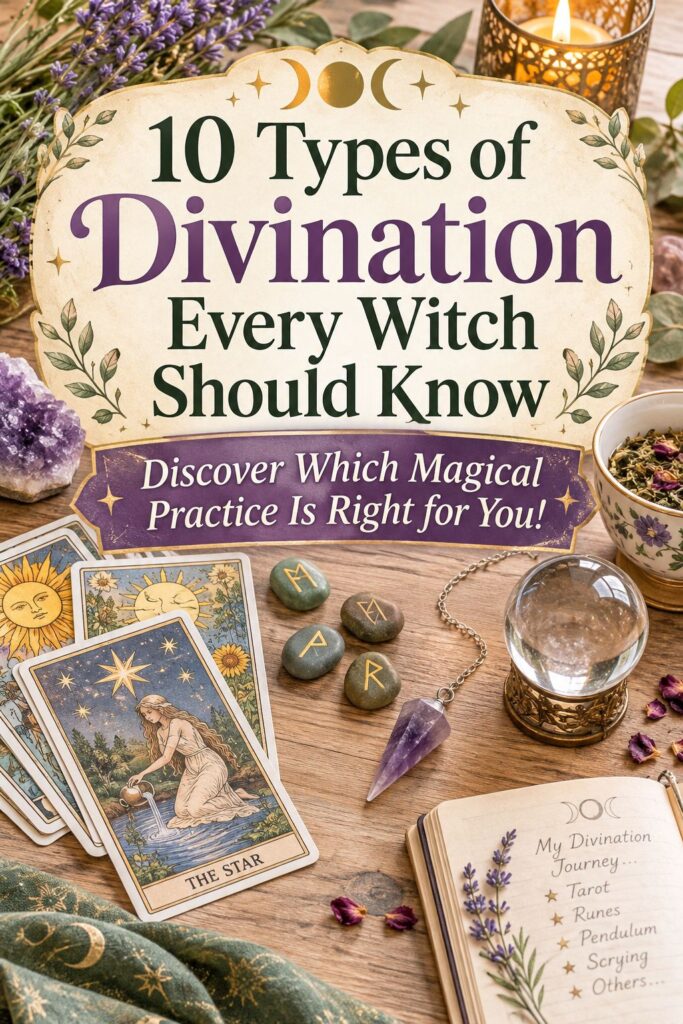
10 Types of Divination Every Witch Should Know
For your convenience, this post might contain affiliate links. If you shop using these links, I might make a small commission at no additional cost to you. You can read the full disclosure here. As an Amazon Associate I earn from qualifying purchases.
A Beginner Witch’s Guide to Types of Divination
Have you ever wished you could get a little insight into what the future holds, find answers to a question that’s been weighing on your mind, or better understand the energy surrounding a particular situation? That’s where divination comes in! There are so many different types of divination to explore, and each one offers a unique way to tap into your intuition, uncover hidden messages, and connect with the spiritual world.
Whether you’re a beginner witch just starting to explore your magical path or you’ve been practicing for years, divination can be a wonderful addition to your spiritual practice. The best part is hat you don’t need to be naturally psychic or have years of experience to get started. Many forms of divination are surprisingly easy to learn, and you might already have some of the tools you need!
From reading tarot cards and casting runes to interpreting tea leaves and working with pendulums, there’s a divination practice for just about everyone. Some methods rely on symbols and traditional meanings, while others encourage you to slow down, trust your instincts, and pay attention to the subtle messages around you.
In this post, we’re exploring 10 types of divination every witch should know, how each one works, and how you can begin incorporating them into your own practice. You might even discover a new favorite way to connect with your intuition!
1. Tarot Card Reading

If there’s one type of divination you’ve heard of, it’s probably tarot card reading. Tarot is one of the most popular divination practices, and for good reason. It offers a wonderful way to explore your questions, gain a fresh perspective on challenging situations, and connect with your intuition.
A traditional tarot deck contains 78 cards divided into two groups: the Major Arcana and the Minor Arcana. The 22 Major Arcana cards represent significant life lessons, spiritual growth, and important turning points, while the 56 Minor Arcana cards explore everyday experiences, emotions, relationships, and challenges.
Related: Powerful Crystals You Can Use During Your Tarot Readings
To begin a tarot reading, you’ll typically shuffle your deck while focusing on a question or situation you’d like guidance about. Then, you’ll draw cards and interpret their meanings based on their imagery, symbolism, and positions in your chosen spread. You can start with a simple one-card reading or try a three-card spread exploring the past, present, and future.
One of the things I love about tarot is that you don’t need to memorize every card meaning before getting started. Take your time, pay attention to the images, and trust your intuition. The more you practice, the more comfortable you’ll become with interpreting the messages your cards reveal.
2. Oracle Card Reading
If tarot feels a little intimidating, oracle cards are another wonderful way to explore divination. They’re especially popular with beginners because they’re generally more flexible and intuitive than traditional tarot decks.
Unlike tarot, which follows a fairly consistent structure of 78 cards, oracle decks come in all sorts of themes, sizes, and styles. Some focus on angels and spirit guides, while others explore crystals, nature, animals, moon phases, affirmations, or spiritual messages. Each deck has its own artwork, symbolism, and meanings, making it easy to find one that resonates with your personal practice.
Using oracle cards is simple. Start by shuffling your deck while thinking about a question or something you’d like guidance with. Draw one or more cards, then spend a few moments looking at the imagery and reading the accompanying message. Consider how the words, colors, and symbols relate to what’s happening in your life.
You can use oracle cards for daily guidance, meditation, setting intentions, or simply checking in with yourself when you need a little clarity. I especially love the idea of pulling a single card each morning to set the tone for your day.
Plus, the best part is that there are no strict rules about how you must use oracle cards. Let your intuition lead the way and enjoy discovering what your deck has to share.
3. Rune Casting
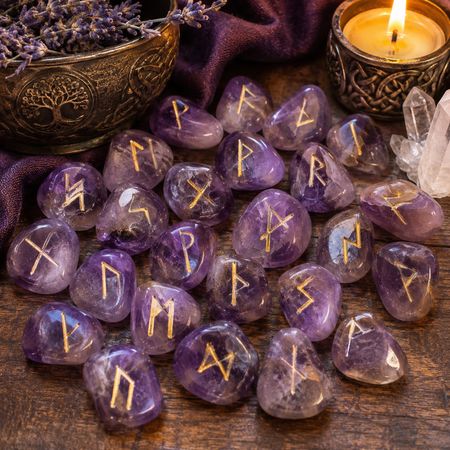
Rune casting is an ancient form of divination that uses symbols carved into small stones, wooden pieces, or other materials to explore questions and gain insight. It’s a fascinating practice with roots in ancient Germanic and Norse cultures, and it’s still used by many modern witches and spiritual practitioners today.
Traditional runes are based on the Elder Futhark, an alphabet consisting of 24 symbols. Each rune has its own name, symbolism, and associations. For example, Fehu is commonly associated with wealth, abundance, and resources, while Algiz is connected with protection and spiritual awareness.
To perform a rune reading, you’ll first want to find a quiet space where you can focus on your question. Hold your rune stones in your hands, take a few deep breaths, and concentrate on the guidance you’re seeking. You can then draw a single rune for a quick message or cast several runes onto a cloth and interpret their positions and relationships.
If you’re new to rune casting, I’d recommend starting with a single-rune reading. It’s a simple way to become familiar with the symbols and their meanings without feeling overwhelmed.
As you become more comfortable, you can experiment with different casting methods and spreads. You may find that working with runes becomes a meaningful way to deepen your spiritual practice and explore your intuition.
4. Pendulum Divination

Looking for a simple form of divination that doesn’t require learning dozens of symbols or card meanings? Pendulum divination might be just what you’re looking for! This practice is easy to learn, requires very few supplies, and can be a lovely addition to your magical toolkit.
A pendulum is typically a small weighted object attached to a chain, cord, or string. It can be made from crystal, metal, wood, or other materials. Many witches enjoy using crystal pendulums, such as amethyst, clear quartz, or rose quartz, but you can choose whichever one feels right for you.
Pendulum divination is most commonly used to explore yes-or-no questions. To begin, hold the chain between your thumb and forefinger, allowing the pendulum to hang freely. Start by asking it to show you what a yes response looks like, followed by a no response. Notice the direction of its movements, as these can vary from person to person.
Once you’ve established your responses, you can begin asking simple questions and observing the pendulum’s movements. Some practitioners also use pendulum boards with letters, numbers, or different response options.
Remember that pendulum movements can be influenced by subtle, unconscious muscle movements, so it’s best to use this practice as a tool for personal reflection rather than a reliable way to establish facts or make important decisions.
5. Scrying
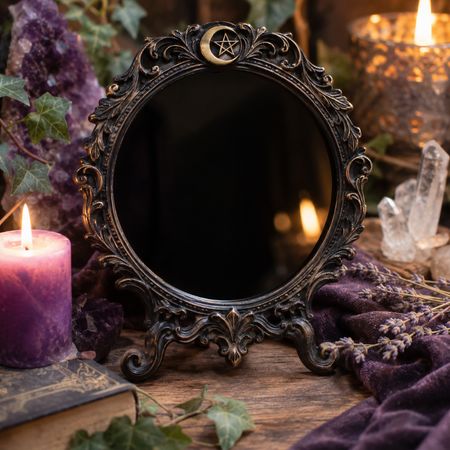
Scrying is one of those divination practices that feels wonderfully mysterious. It involves gazing into a reflective or translucent surface to explore intuitive impressions, symbolic images, or visions. Although crystal balls are probably what come to mind first, there are several different ways to practice scrying.
Some common scrying tools include crystal balls, black mirrors, bowls of water, and even dark reflective surfaces. You don’t need an expensive crystal ball to get started. A simple bowl filled with water or a dark reflective mirror can work just as well for your practice.
To try scrying, find a quiet space where you won’t be interrupted. Dim the lights, light a candle if you’d like, and position your chosen tool in front of you. Take a few deep breaths to relax your mind, then gently gaze into the surface without straining your eyes. Rather than trying to force yourself to see something, allow your thoughts to settle and notice any images, shapes, colors, or impressions that arise.
You may not experience anything particularly dramatic during your first few attempts, and that’s perfectly okay. Scrying takes patience and practice. Keep a journal nearby to record anything you notice and reflect on its possible meaning afterward.
Over time, you may become more comfortable recognizing the symbols and intuitive impressions that emerge during your sessions.
6. Tea Leaf Reading (Tasseography)
If you enjoy a good cup of tea, why not turn your tea time into a little divination practice? Tea leaf reading, also known as tasseography, is an old form of divination that involves interpreting the shapes and patterns left behind by loose tea leaves in a cup. It’s a lovely way to slow down, connect with your intuition, and explore the messages you might discover in everyday moments.
To try tea leaf reading, you’ll need a cup of loose-leaf tea, a light-colored teacup, and a little patience. After enjoying your tea, leave a small amount of liquid and the remaining leaves in the bottom of your cup. Gently swirl the cup, then turn it upside down onto a saucer to drain. Once you turn it upright again, take a look at the patterns left behind.
The shapes and symbols you notice are what make this practice interesting. For example, a heart might represent love or emotional connections, while a bird could symbolize communication, freedom, or an upcoming opportunity. Numbers, animals, and everyday objects can all have different interpretations.
There’s no need to memorize hundreds of symbols before getting started. Pay attention to the images that stand out to you and what they might represent in your life. Keeping a journal of your readings can also help you recognize patterns and develop your interpretation skills over time.
7. Astrology
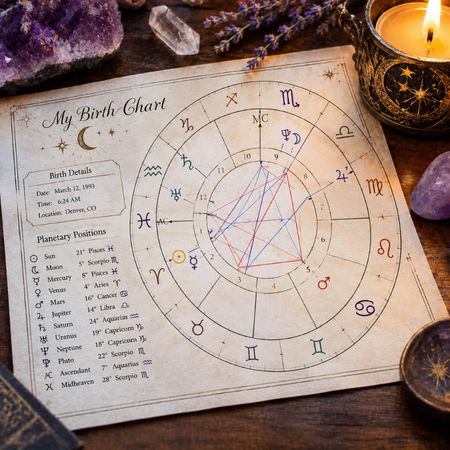
Did you know that astrology can be used as a form of divination? While many people explore astrology to learn more about their zodiac signs and personality traits, it can also offer insight into potential opportunities, challenges, and influences in their lives.
Astrology is based on the belief that the positions and movements of celestial bodies, including the Sun, Moon, and planets, have symbolic connections to our experiences here on Earth. By studying these planetary placements, astrologers interpret patterns that can offer guidance about different areas of life.
One of the best ways to explore astrology is through your birth chart. This is a map of the sky at the exact time and location of your birth. It reveals your Sun, Moon, and rising signs, along with the positions of the planets and their relationships to one another. Each placement offers something different to explore.
You can also use astrology to look at current planetary transits, which describe how the planets are moving in relation to your birth chart. For example, Mercury retrograde is often associated with communication delays, misunderstandings, and opportunities to revisit unfinished business.
If you’re new to astrology, start by learning about your birth chart and following the monthly lunar cycles. You might be surprised by how much there is to discover!
8. Numerology
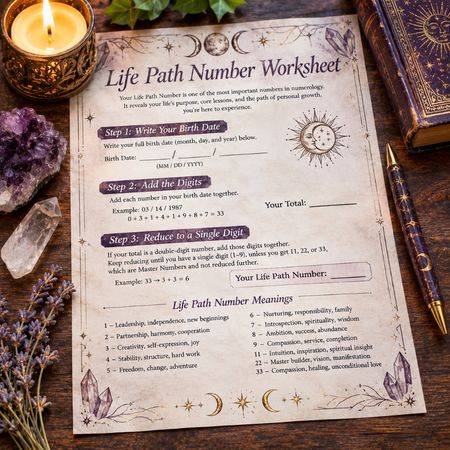
Have you ever noticed the same numbers appearing over and over again? Maybe you keep glancing at the clock at 11:11, seeing repeating numbers on license plates, or noticing a particular number everywhere you go. If so, you might enjoy exploring numerology!
Numerology is a form of divination that explores the symbolic and spiritual meanings associated with numbers. It is based on the idea that numbers carry unique vibrations and energies that can offer insight into personality traits, life experiences, and personal growth.
One of the most popular ways to practice numerology is by calculating your life path number. This number is derived from your birth date and is believed to represent important themes and lessons throughout your life. For example, life path number 1 is associated with independence and leadership, while life path number 6 is connected with nurturing, responsibility, and harmony.
You can also explore repeating number sequences, sometimes called angel numbers. Numbers such as 111, 222, and 444 are often given spiritual interpretations. For instance, 111 is commonly associated with new beginnings and intention-setting, while 444 is often linked with stability and protection.
If you’d like to try numerology, start by calculating your life path number and learning about its traditional meaning. You can also keep a journal of the numbers you frequently encounter and reflect on what was happening when you noticed them.
Numerology is a fun way to explore patterns, develop self-awareness, and bring another layer of meaning to your spiritual practice.
9. Bibliomancy
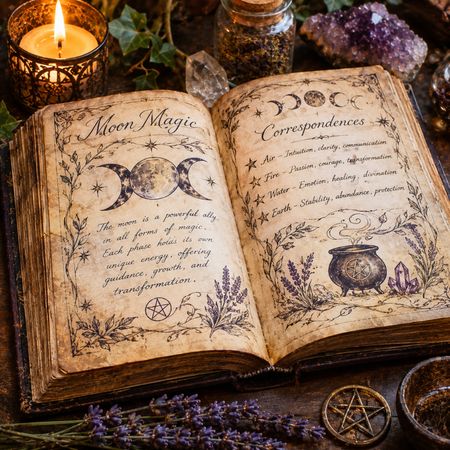
Bibliomancy is the practice of using books to find spiritual guidance or answers to questions. It’s a wonderfully simple method that doesn’t require special tools, expensive supplies, or years of experience. In fact, you probably already have everything you need sitting on your bookshelf.
The practice involves opening a book to a random page or passage and interpreting the words you find as a message related to a question or situation. Traditionally, people have used spiritual texts for bibliomancy, but you can also experiment with poetry collections, mythology books, inspirational writing, or even your favorite novel.
Related: Invite More Thankfulness in Your Life With These Daily Gratitude Journal Pages
To try it yourself, start by choosing a book that feels meaningful to you. Find a quiet place, take a few deep breaths, and focus on a question you’d like guidance about. When you’re ready, open the book to a random page and let your finger fall on a passage without looking for a particular answer.
Read the words carefully and consider how they might relate to your question. Sometimes the message will seem surprisingly relevant, while other times you’ll need to spend a little more time reflecting on its meaning.
One thing I love about bibliomancy is how accessible it is. You can practice it whenever you need a little inspiration or a fresh perspective.
Try keeping a journal of the passages you discover and the thoughts they inspire. You may find that this simple practice becomes a meaningful part of your daily spiritual routine.
10. Osteomancy (Bone Divination)
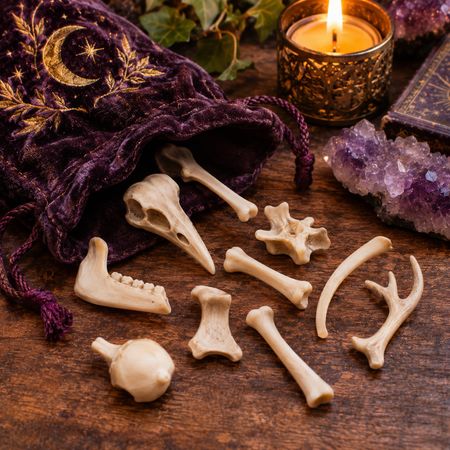
Osteomancy, also known as bone divination, is one of the more unusual types of divination, but it’s also a fascinating practice with a long history in different cultures around the world.
This practice involves interpreting the patterns, positions, and relationships of bones or other small objects after they have been cast onto a surface. Depending on the tradition, practitioners may use animal bones, shells, stones, seeds, or other natural materials. Each object can carry its own symbolic meaning, and the way the pieces land can help shape the interpretation.
To explore this practice, you’ll first need a collection of objects to use in your readings. Some practitioners create casting sets with different pieces representing particular themes, such as protection, abundance, relationships, or personal growth. You can then focus on a question, cast your objects onto a cloth or designated surface, and observe how they land.
Pay attention to which objects fall close together, which ones are separated, and whether any pieces land in unusual positions. You can interpret these patterns using established meanings from a tradition you’re studying or develop a personal symbolic system.
It’s important to approach bone divination with respect and take time to learn about its cultural origins rather than treating every tradition as interchangeable. If you want to experiment with this practice, you can also create a casting set using ethically sourced or non-animal materials.
While osteomancy may not be the first type of divination that comes to mind, it offers an interesting way to explore symbolism, intuition, and the natural world.
Discover the Divination Practice That Speaks to You
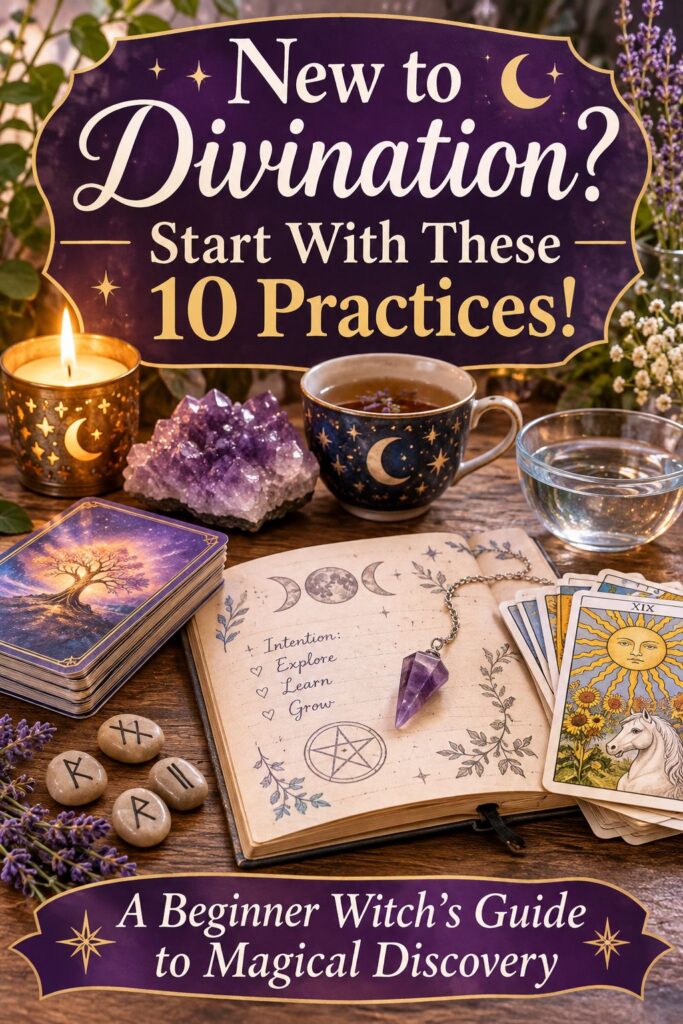
There are so many different types of divination to explore, each offering its own unique way to connect with your intuition, find guidance, and gain a little insight into life’s questions. Whether you’re drawn to tarot cards, curious about reading tea leaves, or interested in trying something a little different like bibliomancy, there’s no shortage of magical practices to discover.
If you’re new to divination, don’t feel like you need to learn everything at once. Start with one or two methods that catch your interest and give yourself time to experiment.
You might discover that you’re naturally drawn to a particular practice, or you may enjoy switching things up depending on your mood or the guidance you’re seeking. There’s no right or wrong way to explore your spiritual path.
Remember, divination isn’t about predicting every little thing that will happen in your future. It’s about slowing down, listening to your intuition, exploring possibilities, and finding new ways to connect with yourself and your spiritual practice.
Now I’d love to hear from you! Have you tried any of these types of divination? Which one is your favorite, or is there a method you’ve been curious to explore? Share your experiences and thoughts in the comments below. I’d love to hear what works for you!

You May Also Like
Unique Tarot Card Storage Ideas to Protect Your Deck

How to Cleanse Tarot Cards for the First Time
